Showing posts with label talks. Show all posts

Thursday, January 29, 2015

Some Updates

Wow, it's been a while since I've written here.  A lot has happened since, however.  Here are a few updates:

The Book

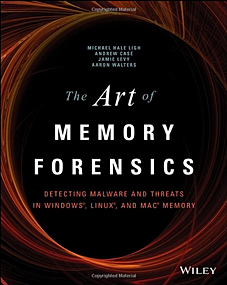
We released a book: The Art of Memory Forensics.  For those of you who are considering teaching memory forensics or even operating systems, we have a syllabus and evidence files on our website that you may use in your classes.

Trainings

We have several trainings in line for this year, public and private.  Public trainings currently include:

  • Reston, VA April 13th-17th 2015
  • New York, NY May 11th-15th 2015
  • Amsterdam, NL August 31st-September 4th 2015
We are also currently working on new course offerings coming out this year.  So keep an eye out for those!

Talks

I'll be speaking at the upcoming CEIC conference in Las Vegas, on Wednesday May 20th 2015.  Apparently there is a discount code if you register before January 31st: JANS4v15

The Volatility team will also give another talk at NYC4SEC during the week of the training in NYC this coming May.  More details will be given for that talk soon.

Monday, April 14, 2014

Volatility Talk at Upcoming NYC4SEC

The Volatility team will give a talk at the next NYC4SEC meetup on memory forensics on May 8th, 2014 at John Jay College.  Make sure to RSVP if you are planning to attend, since there is limited seating!

 Thanks For the Memory: Rootkits, Exfil and APT - RAM Conquers All

The ability to perform digital investigations and incident response is becoming a critical skill for many occupations. Unfortunately, digital investigators frequently lack the training or experience to take advantage of the volatile artifacts found in physical memory. Volatile memory contains valuable information about the runtime state of the system, provides the ability to link artifacts from traditional forensic analysis (network, file system, registry), and provides the ability to ascertain investigative leads that have been unbeknownst to most analysts. Malicious adversaries have been leveraging this knowledge disparity to undermine many aspects of the digital investigation process with such things as anti-forensics techniques, memory resident malware, kernel rootkits, encryption (file systems, network traffic, etc), and Trojan defenses.  The only way to turn-the-tables and defeat a creative digital human adversary is through talented analysts.
 
This talk demonstrates the importance of including Volatile memory in your investigations with an overview of the most widely used memory forensics tool, Volatility, by its developers.

-@gleeda

Thursday, January 30, 2014

OMFW 2013 Slides

In case you missed it, I put up my slides for my OMFW 2013 talk "Every Step You Take: Profiling the System".  You can find them here on google docs. Some of the animations may not render properly, even if played, but you get the idea.  If you want to see the cyboxer plugin, send me an email (jamie.levy {at} gmail . com).

Tuesday, July 16, 2013

Volatility News

Things have been busy lately, but I want to let you know about some important items that are coming up quickly:

July 27-30th, 2013: Blackhat Vegas


Andrew Case and I will teach our course in Digital Forensics and Incident Response again this summer at Black Hat Vegas.  This course will cover enough material to take someone from knowing practically nothing about digital forensics (disk and memory) to a point where s/he can comfortably conduct his/her own investigations.  There is limited time to sign up, so reserve your seat while you can!

You can hear Andrew talk about Digital Forensics and Incident Response on the Healthy Paranoia podcast from July 7th, 2013.

August 1st, 2013: Volatility Plugin Contest


The 1st Annual Volatility Plugin Contest deadline is quickly approaching!   Don't miss this opportunity to win over $2000 in cash and prizes and contribute to the top memory forensics framework by writing a plugin for the Volatility Framework and submitting it to volcon2013@memoryanalysis.net by August 1st, 2013.

September 9-13th, 2013: Volatility Training in the Netherlands


We will have our 4th public offering of our official Windows Malware and Memory Forensics training in the Netherlands September 9-13, 2013.  This will be our only offering outside the US for this year.  Past offerings of our course have been well received and were recently described as the "... perfect combination of incident response, malware analysis and Windows internals."  Don't miss out on your chance to take this course and learn not only how to become a Volatility superuser, but how to apply cutting edge memory and malware analysis methodologies against your worst adversary.

November 4th, 2013: Open Memory Forensics Workshop (OMFW)


The Open Memory Forensics Workshop (OMFW) call for papers has been announced.  If you want to give a talk on memory forensics related topics, please get your submission in by September 1st, 2013.  OMFW is a half-day workshop that will be held one day prior to the Open Source Digital Forensics Conference in Chantilly, VA.  This workshop is fast-paced, to the point, highly technical and intended to raise the bar for analysts who realize the importance of memory forensics when faced with a highly skilled adversary.  Not only will you learn a lot and get to meet all the movers and shakers in the space, but your $50 registration fee is entirely donated to charity!  Last year all proceeds went to the National Center for Missing and Exploited Children.  So don't delay: there really is limited seating and it does go quickly.  Make sure to register your seat now!

November 5th, 2013: Open Source Digital Forensics Conference


The Volatility team will be at the Open Source Digital Forensics Conference discussing The State of Volatility.  Come by and see us there :-)

November 11-15th, 2013: Volatility Training in Reston, VA


We will have our 5th public offering of the official Windows Malware and Memory Forensics training in Reston, VA November 11-15th, 2013.  If you missed the last offering in June, this is your chance to take this course and learn from the developers themselves.  As I've stated before, this class includes real-world scenarios that are reinforced with hands-on labs.  We cover more than "just one tool" as some detractors like to say.  We cover methodologies that will actually help you where some tools fail.  You will have a deep enough understanding to investigate even the most skilled adversaries who know how to break common tools in order to hide.  Don't be fooled and don't be left behind.  Accept no imitations and make sure to take this class.

All students who take the official Volatility training receive a certificate of completion, with CPE credits that can be used for certification renewal.  In addition to this, we are constantly updating the course with new material and past students are given updated materials for FREE.  What more can you ask for?  If you are interested in Volatility training, drop us a line at voltraining [[ at ]] memoryanalysis.net

If you want to see co-trainers MHL and Andrew Case (attrc) in action, I managed to find a couple of videos of their previous talks on youtube:


Friday, April 19, 2013

Upcoming Events and Trainings

I have several speaking and training events that are coming up this year that may be of interest to others in the community:

I will be speaking at the New York Banker's Association's upcoming Annual Technology, Compliance & Risk Management Forum on May 16th, 2013 on the topic of Incident Response and Digital Forensics.  If you plan to attend I'll see you there!

Also we (Volatility) are holding our third run of Windows Malware and Memory Forensics in Reston, VA from Monday June 10th through Friday, June 14th 2013.  This training will not disappoint even the most proficient of forensic/malware analysts.  It includes real-world scenarios that are reinforced with hands-on labs.  All students will leave with skills and confidence to conduct investigations involving RAM samples from acquisition to the final report.  Students also leave with more than just being Volatility power users, they leave with a deeper knowledge of memory forensics and malware analysis methodologies.  Such knowledge is integral regardless of what tools you choose for future investigations, be they open source or commercial, and much more powerful than simply "run this tool, the output is colored red so it's bad".  You'll leave the class with knowledge that will help you to figure out if something really is "bad" or not.  There are still a few seats left for this training, so if you are interested you should register soon.  Send an email to voltraining [at] memoryanalysis.net for registration information.

If you are looking for a course that covers both disk and memory forensics, Andrew Case and I will teach our course in Digital Forensics and Incident Response again this summer at Black Hat Vegas.  This course runs from July 27th through July 30th 2013 and will cover enough material to take someone from knowing practically nothing about digital forensics to a point where s/he can comfortably conduct his/her own investigations.

Also we (Volatility) will hold another run of Windows Malware and Memory Forensics in the Netherlands from Monday September 9th through Friday, September 13th 2013.  Details will appear soon on the Volatility Labs blog.

Planning for the Open Memory Forensics Workshop (OMFW) is in progress.  You should plan to attend if you want to know what's new and hot in the memory forensics space.  OMFW is likely to take place on November 4th, 2013 one day prior to the Sleuth Kit and Open Source Digital Forensics Conference.  Final details will appear soon on the Volatility Labs blog.

Friday, March 23, 2012

Upcoming Cybercrime Studies talk: For a Free Digital Society by Dr. Richard Stallman

Yet another interesting upcoming talk at John Jay College on Tuesday March 27, 2012:


Center for Cybercrime Studies

John Jay College of Criminal Justice

presents

For a Free Digital Society

Dr. Richard Stallman

President

Free Software Foundation

Abstract

Activities directed at ``including'' more people in the use of digital technology are predicated on the assumption that such inclusion is invariably a good thing. It appears so, when judged solely by immediate practical convenience. However, if we also judge in terms of human rights, whether digital inclusion is good or bad depends on what kind of digital world we are to be included in. If we wish to work towards digital inclusion as a goal, it behooves us to make sure it is the good kind.

Richard Stallman launched the free software movement in 1983 and started the development of the GNU operating system (see www.gnu.org) in 1984. GNU is free software: everyone has the freedom to copy it and redistribute it, with or without changes. The GNU/Linux system, basically the GNU operating system with Linux added, is used on tens of millions of computers today. Stallman has received the ACM Grace Hopper Award, a MacArthur Foundation Fellowship, the Electronic Frontier Foundation's Pioneer Award, and the Takeda Award for Social/Economic Betterment, as well as several honorary doctorates.

Date: Tuesday, March 27, 2012
Time: 1:30 PM

Location: L.61 Conference Center (New Building)

John Jay College of Criminal Justice

899 Tenth Avenue

New York, NY

RSVP: Nicole Daniels at 212-237-8920 or email ndaniels@jjay.cuny.edu. For additional information please contact Professor Doug Salane, Director of the Center for Cybercrime Studies, 212-237-8836 or email dsalane@jjay.cuny.edu.

For additional Center for Cybercrime Studies events visit our web site. Go to WWW.JJAY.CUNY.EDU , ACADEMICS, RESEARCH CENTERS and INSTITUTES.


Friday, March 16, 2012

Upcoming Cybercrime Studies talk: Digital Forensic Crime Labs

I just wanted to take the time to announce the following upcoming talk at John Jay College next week:


The Center for Cybercrime Studies

John Jay College of Criminal Justice

Presents


Digital Forensic Crime Labs

Monique Mattei Ferraro

M.S., J.D., CISSP

Technology Forensics, LLC


Digital forensics labs throughout the country were set up and subsidized by United States Department of Justice. Most labs are administered by police or law enforcement agencies. In 2009, the National Academy of Science released “Strengthening Forensic Science in the United States: A Path Forward,” which made several recommendations. Among the recommendations were that criminal labs should be independent of police/law enforcement in order to retain an appearance of objectivity. This talk delves into the tensions between the recommendations and the practice, the ethical implications and current issues affecting digital forensics labs today.


Date: Wednesday, March 21, 2012
Time: 1:30 PM

Location: Haaren Hall, RM 630
899 Tenth Avenue
(10th Avenue and 59th Street)


RSVP: Nicole Daniels at 212-237-8920 or email ndaniels@jjay.cuny.edu. For additional information please contact Professor Doug Salane, Director of the Center for Cybercrime Studies, 212-237-8836 or email dsalane@jjay.cuny.edu.

For additional Center for Cybercrime Studies events visit our Web site (http://www.jjay.cuny.edu/centers/cybercrime_studies/index.php) or go to WWW.JJAY.CUNY.EDU, ACADEMICS, RESEARCH CENTERS and INSTITUTES.

Tuesday, March 22, 2011

John Jay Center for Cybercrime Studies Talk: 3/29/11 2PM

There's an upcoming talk at The Center for Cybercrime Studies, John Jay College of Criminal Justice next week (Tuesday March 29th, 2011 2:00 PM) that may interest some of you in the NYC area:


Cyber Criminals: Who are they? Why are they successful? How do we respond?

Kim Peretti

Director, Forensic Services Practices
PricewaterhouseCoopers LLP

Formerly Senior Counsel
US Dept. of Justice, Criminal Division
Computer Crime and Intellectual Property Section

This session will walk through recent prosecutions of sophisticated hacking rings in order to provide insight into the individuals behind these types of crimes and why they are successful. This presentation will also discuss the emerging area of cyber forensics and methods by which entities can better prevent, detect, and respond to cyber attacks on their systems.


Events will take place at
John Jay College of Criminal Justice
899 Tenth Avenue
Room 630T, Haaren Hall

(between 58th and 59th Streets.)
RSVP to Nicole Daniels (ndaniels@jjay.cuny.edu: 212.237.8920).

Wednesday, January 05, 2011

NYC4SEC Meeting 1/19/2011

There is an NYC4SEC meeting this month on 1/19/2011. This month our speaker is Jon Stewart who will be giving a talk about his new tool: Lightgrep. Details are below:

Lightgrep - Fast Keyword Searching for Forensics

Dislike waiting 5 days for your keyword search to complete? Been brought to tears by thousands of keywords? Lost faith in your forensics tools when they didn't find all the hits they should have? Come to this talk to see the first public demonstration of Lightgrep, a new regular expressions search tool designed specifically for forensics.

Search is a fundamental part of forensics, useful not only for discovering relevant documents and snippets of text, but also artifacts, files in unallocated space, and file signature analysis. We will discuss the basic principles behind how a grep search works, why it's important to consider how multiple keywords are handled, and how to validate a search tool's results. Finally, we'll show Lightgrep, a tool that allows for fast searching for thousands of keywords, with full EnCase integration.

Please join us on Wednesday, January 19th, 7:00pm at John Jay College - Forensic Computing Program and the Center for Cybercrime Studies
899 Tenth Avenue - btwn 58th & 59th
Room 610T - 6th Floor


Don't forget to RSVP!!!

Thanks to Douglas Brush, Prof Bilal Khan, Prof Douglas Salane and Prof Richard Lovely for helping to make this possible.

Wednesday, November 17, 2010

NYC4SEC Meeting 11/17/2010

There is a NYC4SEC meeting tonight (11/17/2010). This month our speaker is Professor Nasir Memon who will be giving a presentation on digital image forensics. Description below:


Photo Forensics: There is More to a Picture Than Meets the Eye

When presented with a device full of active or deleted data – what do you know about the images? Can you recover them all? Can you tell which camera they are taken with? Can you tell if they are manipulated? Can you find from the Internet all other pictures taken from the same camera? Forensics professionals all over the world are increasingly encountering such questions.

Given the ease by which digital images can be created, altered, and manipulated with no obvious traces, digital image forensics has emerged as a research field with important implications for ensuring digital image credibility. This presentation provides an overview of recent developments in the field, focusing on three problems.

First, collecting image evidence and reconstructing them from fragments, with or without missing pieces. This involves sophisticated file carving technology.

Second, attributing the image to a source, be it a camera, a scanner, or a graphically generated picture. The process entails associating the image with a class of sources with common characteristics (device model) or matching the image to an individual source device, for example a specific camera.

Third, attesting to the integrity of image data. This involves image forgery detection to determine whether an image has undergone modification or processing after being initially captured.

So please join us on Wednesday, November 17th, 7:00pm at John Jay College.

John Jay College - Forensic Computing Program and the Center for Cybercrime Studies
899 Tenth Avenue - btwn 58th & 59th
Room 610T - 6th Floor


Don't forget to RSVP!!!

Thanks to Douglas Brush, Joe Garcia, Prof Bilal Khan and Prof Douglas Salane for making this possible.

Tuesday, October 19, 2010

Upcoming NYC4SEC Meeting 10/27/2010

We have another NYC4SEC meetup next week on October 27th, 2010 7:00PM:

Halloween Edition - Are those knocks on your firewall doors for tricks or treats?

Either way you have to realize one of the largest threats to your environment is the human element and none other than super malware and security forensicator Lenny Zeltser will be giving us a special Halloween talk about how attackers can trick you or the people inside your organization to get access to treats. Ok, no more puns....

John Jay College has reached out and offered to host this and future events for NYC4SEC so lets spread the word and show them that the NYC cyber security community is strong in numbers and appreciate their support!


Lenny Zeltser
- "Knock, Knock! How Attackers Use Social Engineering to Bypass Your Defenses"

Why bother breaking down the door if you can simply ask the person inside to let you in? Social engineering works, both during penetration testing and as part of real-world attacks. This talk explores how attackers are using social engineering to compromise defenses. It presents specific and concrete examples of how social engineering techniques succeeded at bypassing corporate security defenses. Lenny Zeltser will review how attackers have bypassed technological controls by making use of social engineering techniques. Attend this engaging talk to improve the relevance of your security awareness training and to adjust your defenses by revisiting your perspective of the threat landscape.

John Jay College - Forensic Computing Program and the Center for Cybercrime Studies
899 Tenth Avenue - btwn 58th & 59th
Room 610T - 6th Floor


More details and RSVP here:

NYC4SEC RSVP

Thanks to Douglas Brush, Joe Garcia, Prof Bilal Khan and Prof Douglas Salane for making this possible.

Monday, August 30, 2010

Upcoming NYC4SEC Meeting 9/16/10

The next NYC4SEC meeting will take place on September 16, 2010 at 7:00PM at Pace University. Details:

Grab your TrapperKeepers (I'm rockin' the red Lambo), your Saved By the Bell book covers and Garbage Pail Kids cards to stick on the inside of your locker because it's back to school time.

Pace University is our gracious host and our speaker will be Ovie Carroll who will be in town teaching a SANS Forensics 408: Computer Forensic Essentials Course here in NYC and offered to stop by after a day of training to meet our group.

If you would like to attend the 408 course Ovie has provided a special offer for a class discount! Use "COINS-OC" to get 10% off and to make sure to get into class! http://www.sans.org/new-york-forensics-2010-cs/description.php?tid=4207

More details to follow on specific room location for the NYC4SEC Meet-up but please get your parents to sign off on your NYC4SEC permission slips for Thursday, September 16th @ 7pm

Thanks to Douglas Brush and Joe Garcia for arranging this event.

More details can be found here: http://www.nyc4sec.info/calendar/14520625/

Thursday, January 28, 2010

Cybercrime Studies: File Carving for Forensics Recovery

There is an upcoming talk at John Jay College that should be interesting:

File Carving for Forensics Recovery

Nasir Memon

Professor of Computer Science
Director of the Information Systems and Internet Security (ISIS) Lab
Polytechnic Institute of New York University


As the number of digital devices in use continues to increase, there has also been an increase in the seizure and analysis of digital data for forensic purposes. One of the areas of high forensic interest is in the recovery of digital data from devices. In cases where the file system information for a digital device is missing or corrupt, newer data recovery techniques involving a process known as file carving are used to recover the data. This talk describes the need for and evolution of file carving, and presents the various technologies that have been used to improve file carving recovery, including our own Smart Carving techniques.

Date: Tuesday, February 9, 2010
Time: Reception – 1:45pm, Lecture – 2:00 pm
Location: Room 630T, Haaren Hall
899 Tenth Avenue, New York City 10019


RSVP: Nicole Daniels at 212-237-8920 or email ndaniels@jjay.cuny.edu.
For additional information please contact Professor Doug Salane, Director of the Center for Cybercrime Studies, at 212-237-8836 or email dsalane@jjay.cuny.edu.

Saturday, January 02, 2010

Briefly: Misc News

Into the Boxes Issue 0x0 is now out. It contains a small article on Linux memory forensics I wrote as well as a cool article on Windows 7 UserAssist Registry Keys by Didier Stevens, a hardware quick tip and FTK imager quick tip by Don C. Weber and a PCI interview with Harlan Carvey. For those who are interested in contributing to future publications, check out the Collaboration Box. Congratulations to Don and Harlan on the first release!

There is a new meetup group that I am helping to organize: NYC4Sec. The group consists of computer security, forensics and compliance professionals based in the Tri-State area and we will be meeting to discuss the latest trends in threats and responses as well as what to do when attacked. We are aiming to meet at the end of the month. Feel free to sign up and come to the meeting. If anyone is interested in presenting at the meeting, please contact myself or Morton Swimmer.

I have also been asked to give a talk at CEIC 2010. So if you are planning to attend, I'll see you there :-)

Friday, October 09, 2009

Briefly: OMFW 2010

Open Memory Forensics Workshop (OMFW) 2010 is currently being planned. If you are interested in presenting or helping out, let them know!

Briefly: Malware Marketing talk at John Jay College

There's an upcoming talk at John Jay College next week that may interest some of you in the NYC area:

Understanding the Market for Malware and Cybercrime

Thursday, Oct. 15, 2009
3:15 pm, room 630T
Tom Holt, Assistant Professor
School of Criminal Justice
Michigan State University

Events will take place at
John Jay College of Criminal Justice
899 Tenth Avenue
(between 58th and 59th Streets.)
RSVP to Nicole Daniels (ndaniels@jjay.cuny.edu: 212.237.8920).